The 9 biggest ebike brands, ranked for first-time buyers
Independent ebike guidance. No brand pays to change the verdict. Some links are affiliate links. Read our disclosures.
Most first-time buyers spend weeks comparing specs, reading forums and watching reviews.
Almost nobody asks the question that matters: will this brand still exist to honor your warranty in two or three years?
We counted down the nine biggest ebike brands in the world.
The ranking is by global scale, manufacturing depth, and how relevant each brand is to a beginner, not by marketing budget.
The brand at number one is one most beginners overlook, and where it lands should change how you shop.
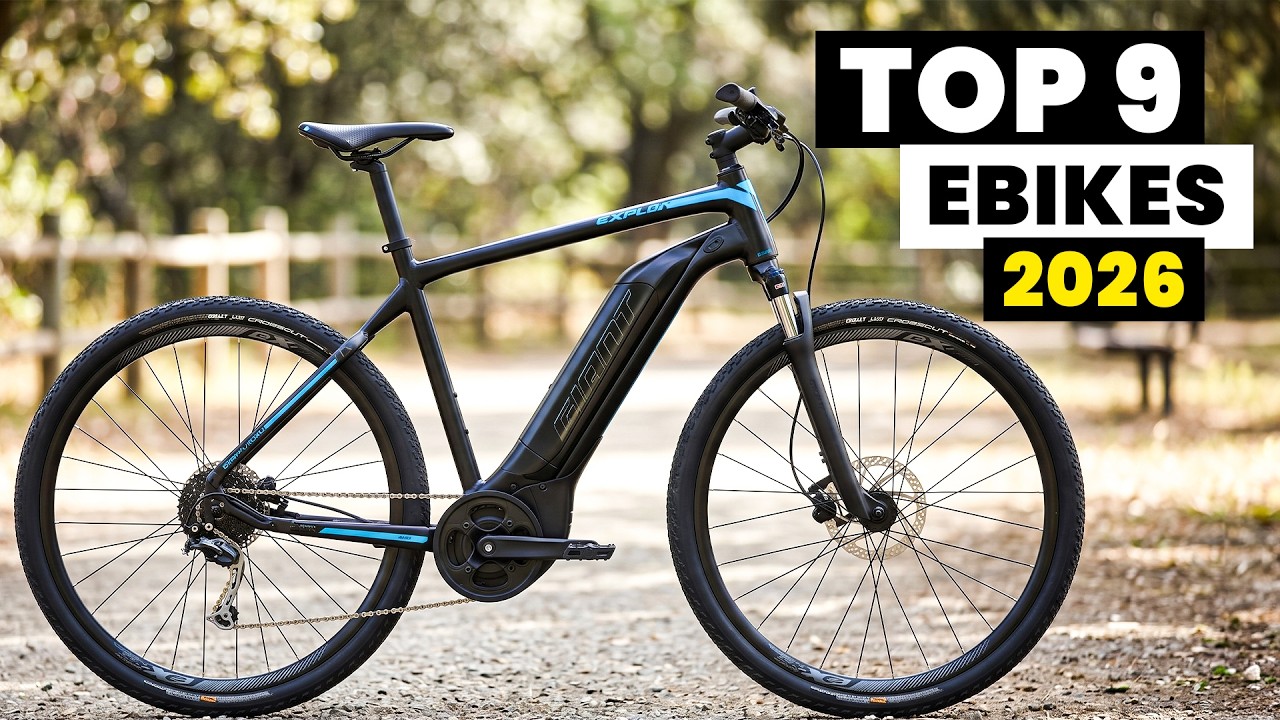
Watch the video version on YouTube
The ranking at a glance
| Rank | Brand | Based in | Typical starting price | Best for |
|---|---|---|---|---|
| 1 | Giant | Taiwan | $2,000 to $5,000 sweet spot | Most real bike for your money, strong first test ride |
| 2 | Yadea | China | Competitive, value focused | Affordable urban commuting |
| 3 | Yamaha | Japan | Varies | Smooth mid-drives, city and trekking |
| 4 | Pon Holdings | Netherlands | Varies by brand | Financial stability across many brands |
| 5 | Bosch eBike Systems | Germany | Motors on bikes from $2,500 up | Proven drive systems, wide service network |
| 6 | Specialized | USA | About $3,000 to $10,000+ | Integrated, cohesive premium bikes |
| 7 | Trek | USA | About $2,500 and up | Best dealer network, after-sales support |
| 8 | Aventon | USA | $1,500 to $2,500 range | Affordable bikes that do not look like ebikes |
| 9 | Rad Power Bikes | USA | Direct-to-consumer | Understand the warranty situation first |
What owner surveys say about ebike reliability
No one publishes a clean, brand-by-brand failure rate for ebikes. Surveys are the best evidence we have, and they are small.
In a Singletrack World survey of about 400 ebike owners, 36% reported an ebike-specific problem they could not fix themselves. The bike had to go back to the retailer (Singletrack World).
Its readers skew toward electric mountain bikes, so treat the number as a signal, not a market average.
The same writers advise buying where a decent service centre is nearby. That is why dealer networks weigh heavily in our ranking.
Consumer NZ takes a stricter approach. It only rates a brand for predicted reliability once the brand has at least 30 survey responses (Consumer NZ).
#9: Rad Power Bikes
Rad Power grew into the biggest direct-to-consumer ebike brand in North America by volume.
Its Rad Rover, Rad Wagon and Rad Runner lines sold over a million bikes.
The company then filed for Chapter 11 bankruptcy in December 2025 and was acquired in March 2026 by Life EV Group for around $13 million, a fraction of its former valuation.
The new owner says it plans to keep the brand going, reopen stores and move toward US-based assembly.
Whether that plays out is still open.
Why it is here: Used examples are easy to find, and the lineup is a useful reference for the direct-to-consumer market. Keep in mind: If you are buying new, look into the warranty situation before you pay.
#8: Aventon
Founded in California in 2012 as a fixed-gear track bike company, Aventon moved into ebikes in 2018 with the Pace 500.
It has become one of the fastest-growing ebike brands in the US by making affordable ebikes that do not look like ebikes: clean integrated batteries, hydraulic disc brakes on better models, and torque sensors on higher-end ones.
It owns a manufacturing facility in China, which gives it more quality control than brands that rely on third-party factories, and it has over 1,800 retail partners in the US, which matters when your bike needs service.
Why we like it: If you are in the $1,500 to $2,500 range and based in North America, it is one of the most sensible starting points here.
#7: Trek
Trek was founded in Wisconsin in 1976 and is one of the most recognizable names in cycling.
Its ebikes mostly run Bosch motors. The Allant series covers urban commuting and the Powerfly handles trail riding.
Its dealer network is one of the most extensive in the world, so there is probably an authorized shop near you.
Why we like it: After-sales support. Keep in mind: Prices start around $2,500 and performance models go well beyond $5,000, which is more than many first-time buyers need.
#6: Specialized
Founded in 1974 in Morgan Hill, California, Specialized built its own proprietary SL motor system rather than partnering with Bosch or Yamaha.
That is either engineering confidence or a long-term risk, depending on how the ecosystem develops.
What you get is a more cohesive bike, with the motor, battery and display designed around each other.
The Turbo Vado and Turbo Como are solid commuter options, and the Turbo Levo is one of the most respected electric mountain bikes.
Keep in mind: Entry-level pricing starts around $3,000 and top-end models pass $10,000, a hard spend for a beginner. Understanding where Specialized sits still helps calibrate everything else.
#5: Bosch eBike Systems
Bosch does not sell complete bikes.
It makes the motors, batteries and displays that power ebikes from Trek, Cannondale, Riese & Müller, Scott and dozens of others.
It entered the ebike motor market in 2011, and its Performance Line CX is considered one of the best mid-drive systems available.
A Bosch system has been proven over millions of kilometers, with a global service network, available parts and firmware updates over time.
Why it matters: At $2,500 and above, a Bosch badge on the motor is a meaningful signal of long-term reliability. It is not the only thing that matters, but it separates a confident purchase from a gamble.
#4: Pon Holdings
Pon Holdings is a Dutch conglomerate you have probably never heard of, but you have heard of its brands.
Through Pon Bike it owns Gazelle, Kalkhoff, Focus, Cannondale, Schwinn, Batavus, Raleigh and others.
In a European bike shop, bikes that look like competitors can share a parent company.
Why it matters: Gazelle is worth a look for a reliable urban commuter, particularly in Europe, and Cannondale is a serious performance option. Backing from Pon's scale gives these brands financial stability that many smaller ebike companies lack. Brands disappear. Pon is probably not going anywhere soon.
#3: Yamaha
Yamaha launched the world's first commercially sold electrically power-assisted bicycle, the Yamaha PAS, in Japan in November 1993.
Today it sells complete ebikes under its own name and supplies motor systems to other manufacturers.
Its PW series drive units are consistently rated among the smoothest and most natural-feeling mid-drives.
Its own lineup is strongest in city commuter and trekking bikes.
Why we like it: A Yamaha motor badge on another brand's bike is a good sign, and the engineering track record covers over 30 years.
#2: Yadea
Yadea is one of the largest electric two-wheeler manufacturers in the world by unit volume, with deep roots in China and a growing presence in Southeast Asia, Europe and South America.
Its design philosophy is practical urban commuting: affordable, low maintenance, A to B.
It competes on price, backed by tight supply chain control and fast production iteration, and it has already expanded into Europe.
The gap between Chinese manufacturing quality and what US and UK buyers will accept has been closing faster than many legacy brands like to admit.
Why it matters: As western ebike markets grow and buyers become more price sensitive, Yadea becomes more relevant. For more on Chinese brands, see our Chinese ebike brands review.
#1: Giant
Giant, founded in Taiwan in 1972, is the largest bicycle manufacturer in the world across all categories.
That scale is an advantage no other brand here can fully replicate.
It has made bikes for its own label and, at various points, frames for brands including Trek and Specialized before they built their own facilities.
Its production capacity, supply chain control, aluminum foundry and in-house components give it a cost and quality baseline that is hard to match.
Its ebike lineup covers nearly every category, from the Trance X E+ for trail riders and the Explore E+ for commuters to the Revolt E+ for gravel.
It has worked with Yamaha on motor systems for years and has built electric bikes since the 1990s.
Distribution reaches North America, Europe and Asia.
Why it is number one: Not because its bikes are the most exciting or talked about on social media. It ranks first because of manufacturing scale, engineering depth and the long-term stability that matters when you plan to ride a bike for years. At almost every price point between $2,000 and $5,000, a Giant gives you more real-world bike for your money than much of the competition. For a first ebike, it belongs at the top of your test ride list.
How to use this ranking
Brand reliability is one factor, not the whole decision.
Match the brand to your budget, your terrain and the service you can reach.
Then read our guide to ebike buying mistakes before you spend.
Frequently asked questions
Which ebike brand is the most reliable?
Our ranking puts Giant first, on manufacturing scale, engineering depth and long-term stability. Reliability also depends on the model and on service support where you live.
Are Trek and Specialized ebikes worth the price?
They are strong options if after-sales support and build quality matter and budget is not the main limit. Trek ebikes start around $2,500 and Specialized around $3,000, so they may be more than a first-time buyer needs.
What is the Bosch eBike System?
Bosch makes motors, batteries and displays used by many brands, including Trek, Cannondale and Riese & Müller. Its systems have been proven over millions of kilometers and have a global service network.
What happened to Rad Power Bikes?
Rad Power Bikes filed for Chapter 11 bankruptcy in December 2025 and was acquired in March 2026 by Life EV Group. The new owner has stated plans to continue the brand. If you are buying new, check the warranty situation first.
Are Chinese ebike brands any good?
Quality has improved a lot and the gap with legacy brands is closing. Yadea is one of the world's largest electric two-wheeler makers. Check warranty and local support before buying from any brand.
Disclosure
Independent ebike guidance. No brand pays to change the verdict.
Specs and prices are as of the video publish date and may change. Always confirm with the brand before buying.